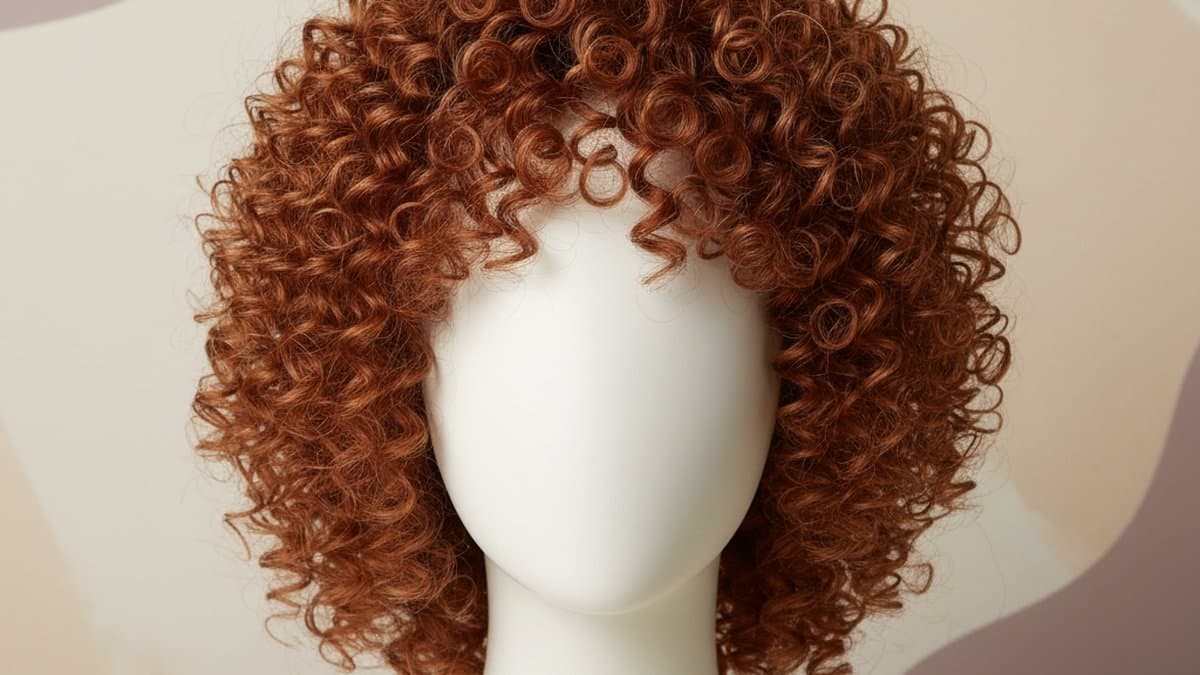
The fiber families
- Standard synthetic (often acrylic or polyester blends) comes pre-styled and returns to that style after washing. It cannot take curling irons or straighteners, because heat melts or kinks the fiber permanently.
- Heat-friendly synthetic (labeled heat-defiant, heat-resistant, or with a temperature rating) tolerates tools typically up to 160°C to 180°C. It gives styling flexibility but loses the "washes back into style" magic, and frizzes sooner than standard fiber.
- Kanekalon and toyokalon are modacrylon fiber brands you will see named in cosplay and braiding contexts. They are prized for taking steam styling well, which is why character wig builders prefer them.
Marketing terms like "premium synthetic" are not standardized; the temperature rating and fiber content line matter more than the adjective.
Where synthetic genuinely wins
- Medical wigs. Most medical-grade lines are synthetic because the fiber is light, hypoallergenic, holds the cut style, and keeps the price of a cranial prosthesis manageable. A good synthetic medical wig is often indistinguishable from human hair at conversational distance.
- Cosplay. Character styles need to hold spikes and unnatural colors; synthetic fiber takes steam and glue in ways human hair does not. See Cosplay & Character Wigs.
- Style retention. A curly synthetic wig stays curly through rain, sleep and washing. A human hair curly wig needs re-styling to get there.
- Price. $40 to $150 covers most of the fashion market, including reputable medical brands' entry lines.
Honest lifespan expectations
Synthetic fiber does not age gracefully. With regular wear:
- 1 to 3 months for daily-wear units exposed to friction (collars, bags, pillows).
- 3 to 6 months with rotation between multiple wigs and proper care.
- Frizz at the nape and shoulders is the usual end, caused by friction rather than washing.
This is why experienced wearers rotate two or three synthetics rather than nursing one. At synthetic prices, rotation is cheaper than the care products that claim to reverse frizz.
Care rules that actually matter
- Wash in cool water with synthetic-specific shampoo; hot water relaxes the pre-set style.
- Never brush dry curly fiber. Detangle with fingers or a wide-tooth comb, damp, from ends up.
- Keep away from ovens, hairdryers on hot, and open flames; standard fiber is flammable and heat-friendly fiber still has a ceiling.
- Store on a wig stand, away from direct sun, which fades color.
Full routine: How to Care for Synthetic Wigs.
Buying notes
For fashion synthetics, multi-brand retailers give you the widest comparison; for medical lines, retailers experienced in fitting matter more than price. Our retailer reviews and medical brand reviews rank both.
Sources
- Modacrylic (Wikipedia) on the fiber family used in most synthetic wigs, including heat sensitivity and care.
- American Cancer Society: Wigs for Hair Loss on choosing wigs during treatment.