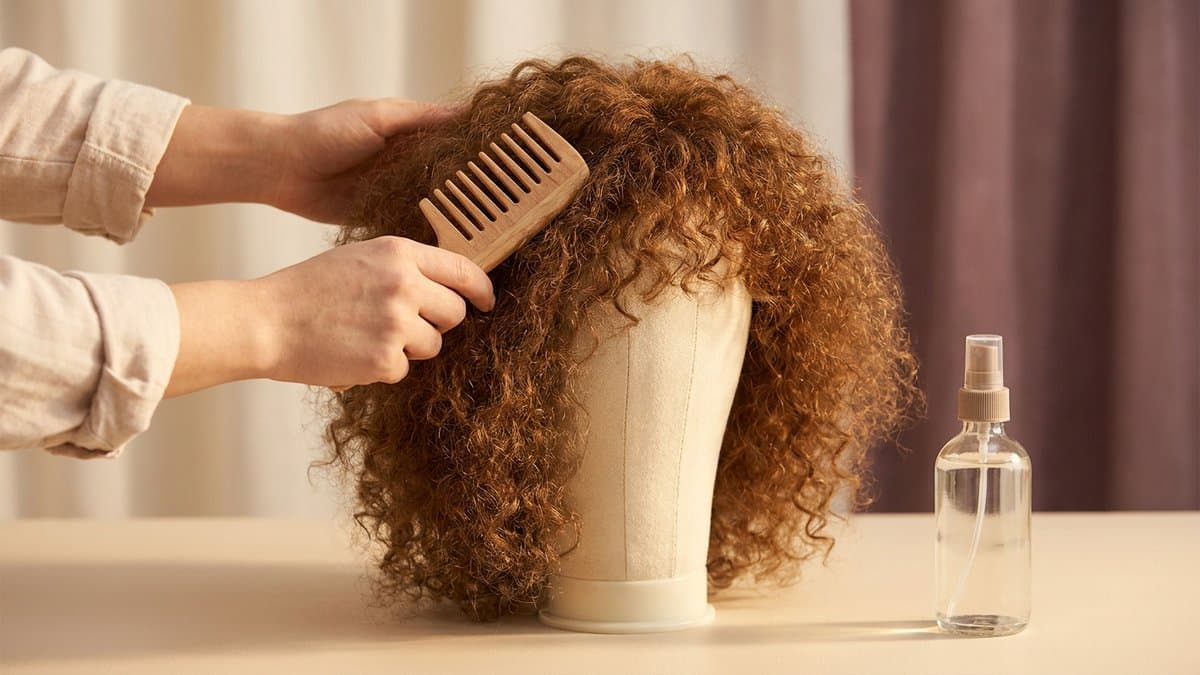
Why wigs frizz
Frizz appears where the fiber is abraded: the nape and shoulders from collar and bag-strap rub, the ends from pillow contact, and anywhere brushed dry or over-heated. Because a wig has no scalp oils to smooth the cuticle, abrasion shows faster than on biological hair.
Knowing the cause tells you whether it is fixable:
- Synthetic: abrasion roughens the fiber permanently. You can smooth it temporarily, but prevention is the real fix.
- Human hair: dryness and cuticle disruption. Usually restorable with moisture and care. See human hair care.
Fixing a frizzy synthetic wig
- Detangle damp with fingers or a wide-tooth comb, ends first.
- Use a fabric-softener rinse or a synthetic detangler to relax and smooth.
- Steam to re-set curls and smooth flyaways (heat-friendly fiber only within its rating).
- Trim the worst nape ends; a clean hem beats a frayed one.
These improve appearance but do not undo abrasion. If the nape is matted beyond smoothing, the unit is at end of life; see synthetic lifespan.
Fixing a frizzy human hair wig
- Wash with sulfate-free shampoo, then a deep-conditioning mask.
- Detangle damp with a wide-tooth comb, ends first.
- Apply a light oil or leave-in to seal moisture.
- Air-dry on a stand; avoid rubbing with a towel.
Restored human hair stays restored only if you change the habits below.
Prevention that actually works
- Store on a stand or in a satin bag, never crushed. See how to store wigs.
- Sleep on satin or remove the wig; cotton pillows sand the ends.
- Keep collars and straps off the nape where possible.
- Never brush synthetic dry; never brush any wig from the roots down.
- Rotate units so no single wig takes daily abrasion.
When to replace instead of fix
There is a point where smoothing a synthetic wig is polishing a worn-out part. If the nape is matted, the curl pattern is gone, or the fiber feels dry and straw-like after a softening rinse, the unit has reached end of life and further product is wasted money. Human hair is more forgiving: if it still holds moisture after a deep mask, it can be revived; if it snaps or stays brittle, the cuticle is too damaged and replacement is the honest call.
Keeping a rotation of two or three units is the cheapest way to delay this moment, because each wig accumulates friction more slowly.
Frequently asked questions
- Can I use anti-frizz serum?
- On human hair, sparingly on ends. On synthetic, use products made for synthetic fiber; silicone serums can build up.
- Why is only the nape frizzy?
- That is the friction zone from collars and movement; it is the first place abrasion shows.
- Does washing cause frizz?
- Washing correctly does not; scrubbing, hot water and towel-rubbing do.
Sources
- Wikipedia: Modacrylic on synthetic fiber behavior and heat sensitivity.
- r/wigs frizz prevention and rescue routines.