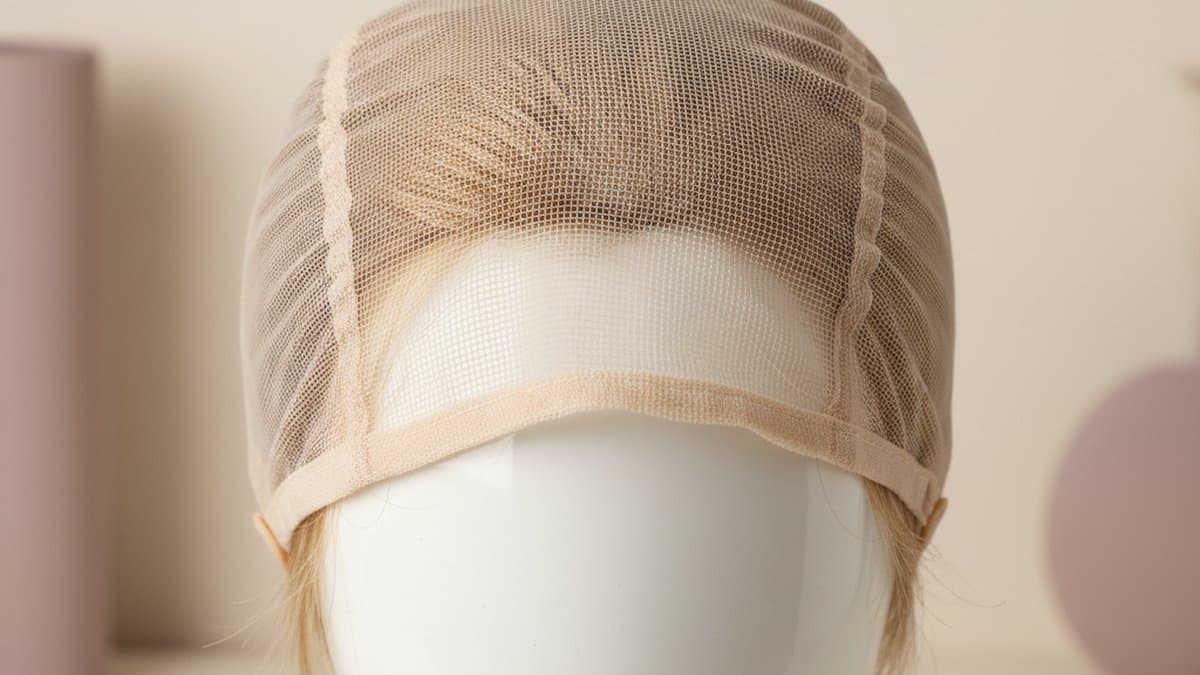
Why cap construction matters for medical wear
Fashion wig buyers choose caps for looks. Medical wearers choose caps for tolerance. A scalp affected by alopecia, chemotherapy or radiation can be tender, dry or hypersensitive, and the wig may be worn 12+ hours a day. Three construction features address that:
- Monofilament top. Each hair is individually knotted to a fine, sheer mesh. The knot sits on mesh rather than against skin, the part looks like scalp, and air moves through.
- Hand-tied wefts / full hand-tied caps. Instead of machine-sewn wefts, the entire cap is knotted by hand. Nothing stiff touches the head; the cap moves like hair grows.
- Soft, covered edges. Velvet or silicone-lined front bands and ear tabs reduce friction at the points where cheap caps rub.
Monofilament levels, decoded
Listings use these terms inconsistently, but the hierarchy is:
| Construction | What it covers | Typical use |
|---|---|---|
| Mono part | Mesh only at the part line | Budget medical lines |
| Mono top | Mesh across the crown | The mainstream medical standard |
| Full mono | Mesh across the whole cap | Maximum breathability |
| Full hand-tied | Every hair knotted, no wefts | Premium comfort, highest price |
For most medical wearers, mono top with hand-tied wefts at the sides is the value point. Full hand-tied caps cost far more, and the difference matters most to people with extreme sensitivity.
Fiber choice in medical wigs
Most medical lines are synthetic, for the reasons covered in Synthetic Wigs: light, style-retentive, affordable to replace. Human hair medical wigs exist at premium prices and style more naturally, but the care burden is higher, a real consideration during treatment when energy is scarce.
Fit features worth checking
- Adjustable straps and multiple hook positions for weight changes, which are common during treatment.
- Grip tabs or silicone strips at the front and nape so the wig stays put without adhesive.
- Open wefting at the back for airflow in warm climates.
If you are buying for treatment-related hair loss, read Medical Wigs and Insurance before paying: a prescribed wig can be partially reimbursed as a cranial prosthesis, and the paperwork is easier than most people expect.
Where to buy
Medical lines are sold through certified retailers and boutiques rather than factory-direct. Our medical brand reviews cover the major houses, and our retailer reviews cover where to actually purchase and get fitted.
Sources
- American Cancer Society: Wigs for Hair Loss on choosing wigs during treatment.
- National Alopecia Areata Foundation patient resources on hair loss options.