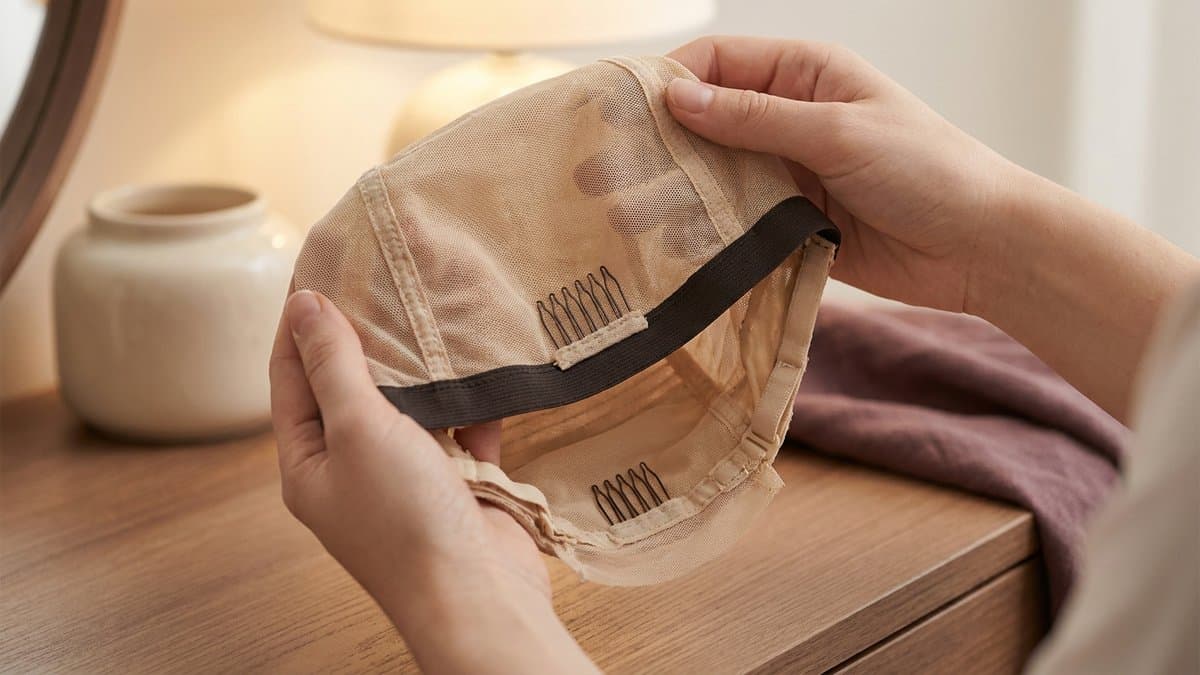
It looks like magic the first time you see a glueless wig stay put: no adhesive, no tape, and the hairline does not lift. It is not magic. A glueless wig stays on through three ordinary physical forces arranged on purpose: tension at the nape, friction around the perimeter, and a few small anchors. Get all three working and the wig holds through a normal day; miss one and it slides, and people reach for glue they do not need.
Force one: tension at the nape
Every glueless cap has adjustable straps at the back. Tightened a notch or two, they make the cap hug the narrowest part of your head, the nape, so the wig cannot ride up or shift forward. This is the foundation. Without it the other two forces fight a cap that is simply too big. Measure first with our cap sizing guide, then take up slack with the straps until you can fit one finger under the cap at the nape.
Force two: friction around the perimeter
Tension stops the wig moving up and down. Friction stops it sliding side to side and lifting at the front. That friction comes from a velvet or silicone wig grip band worn at the hairline, or from an elastic band sewn into the cap on wear-and-go units. The band grips both your skin or cap and the wig's inner lining, so the front stays put. Our guide to wig caps, grips and liners covers choosing velvet versus silicone.
Force three: anchoring combs
Most caps have three to four small combs, usually at the temples and nape. Pushed down into your wig cap or natural hair beneath, teeth toward the scalp, they act as anchors against sudden movement: a quick turn, a hug, a breeze. They are insurance rather than the main hold, and they should sit at the sides and nape, not at the fragile front edges.
Fit is the multiplier
All three forces scale with fit. A cap that is half an inch too big defeats the straps, gaps the grip band and leaves the combs floating. A cap that is too small creates pressure that builds to a headache and pushes the wig forward. Correct size plus the three forces is why a well-fitted glueless wig out-holds a glued one that was sized wrong. The full setup order is in the glueless install guide.
When glueless is not enough
There are honest limits. High wind, intense sweat, swimming and multi-week installs all exceed what straps, friction and combs should carry. For those, adhesive or tape at the front is the right tool, and glueless versus glued explains the trade-offs. For everyday wear, though, the three forces above are all you need, and they are kinder to your hairline. If you are shopping for a unit built around them, see our best glueless wig sellers ranking; headband wigs are the most forgiving starting point.
Frequently asked questions
- Will a glueless wig fall off if I bend over?
- Not if the nape straps are set and combs are seated. Bending tests the nape tension, which is the first thing to adjust.
- Do I need a wig grip band?
- It is the single best upgrade for front hold. Many wear-and-go wigs include an elastic band that does the same job.
- How tight should the straps be?
- Snug, not compressive. You should fit one finger under the cap at the nape; a headache means too tight.
Sources
- Wikipedia: Wig for cap construction context.
- r/wigs wearer experience on glueless hold, straps and grip bands.