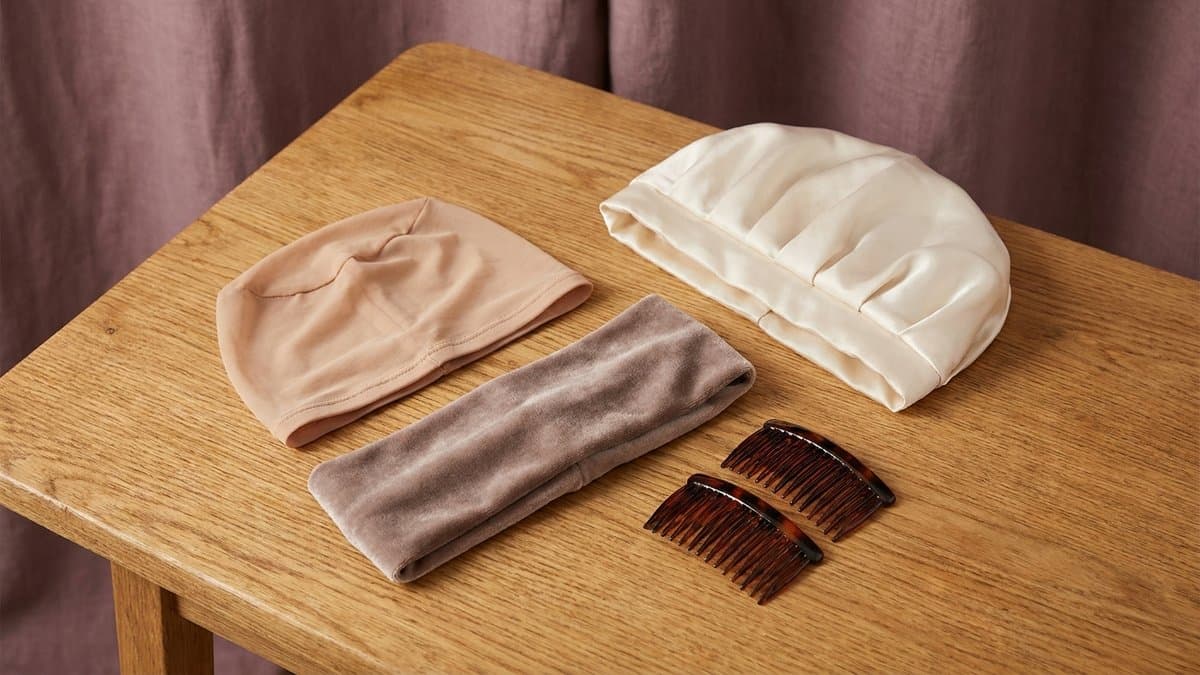
The accessory shelf for wigs is full of small fabric tubes and bands that all look similar and claim to do the same thing. In practice they do three different jobs: flattening the base, adding grip so the wig does not slide, and protecting the hair from friction. Buy for the job you actually have and the shelf shrinks to two or three pieces that earn their place.
The three jobs
Flattening is about making an even surface so the wig tracks the skull. Grip is about stopping front-to-back and side-to-side slide without adhesive. Protection is about keeping rough seams and friction away from your hair and edges. Each product below is good at exactly one of these.
Wig caps
A wig cap, usually nylon or mesh, contains your braids or slicked hair and gives the wig a smooth, even base. Choose a shade close to your scalp for lace work, and a stretchy breathable weave for comfort. The cap should sit flat and low. If it bunches, it creates the bumps you are trying to remove. Caps are the cheapest and highest-value item on this list, and they are essential over a braided base, as covered in wearing a wig over braids and locs.
Grip bands
A wig grip is a velvet or silicone band worn at the hairline under the wig. It adds friction around the perimeter so the cap holds without glue and without cranking the straps, which is exactly what you want for a gentle fit. Velvet is kinder for sensitive scalps. Silicone holds best on smooth skin. A grip band is the single best upgrade for anyone who has relied on glue or tight combs; see the glueless install guide.
Liners and satin-lined caps
A liner sits between your hair and the wig to reduce friction and wick less moisture than cotton. Satin-lined caps combine the flattening job with a smooth surface against the hair, which matters for long-term protective wear and for edges that are prone to breakage. See protecting your edges and satin and silk for wigs.
What you do not need
You do not need every variant. A glue gel or heavy adhesive is not an accessory and is the thing these pieces exist to avoid. Double-capping (two nylon caps) adds heat without much benefit for most people. And expensive "grip caps" that combine everything are fine but not required. A plain cap plus a separate grip band does the same job for less.
Putting it together
For daily glueless wear: flatten with a cap, add a grip band at the hairline, then secure with nape straps and side combs. For protective long-term wear: swap the plain cap for a satin-lined one. That combination covers all three jobs without tension, and it is the setup our best wigs for protective styling ranking assumes.
Frequently asked questions
- Do I need a wig cap if my hair is slicked?
- It helps but is optional. Over braids or locs it is essential; over slicked hair it mostly adds grip and smoothness.
- Velvet or silicone grip?
- Velvet for sensitive scalps and daily wear, silicone for the strongest hold on smooth skin.
- Can a grip band damage edges?
- Not if it sits behind the hairline and is not tight. Damage comes from placing it on the edge or over-tightening.
Sources
- Wikipedia: Wig for cap and construction context.
- r/wigs wearer experience on caps, grips and liners.