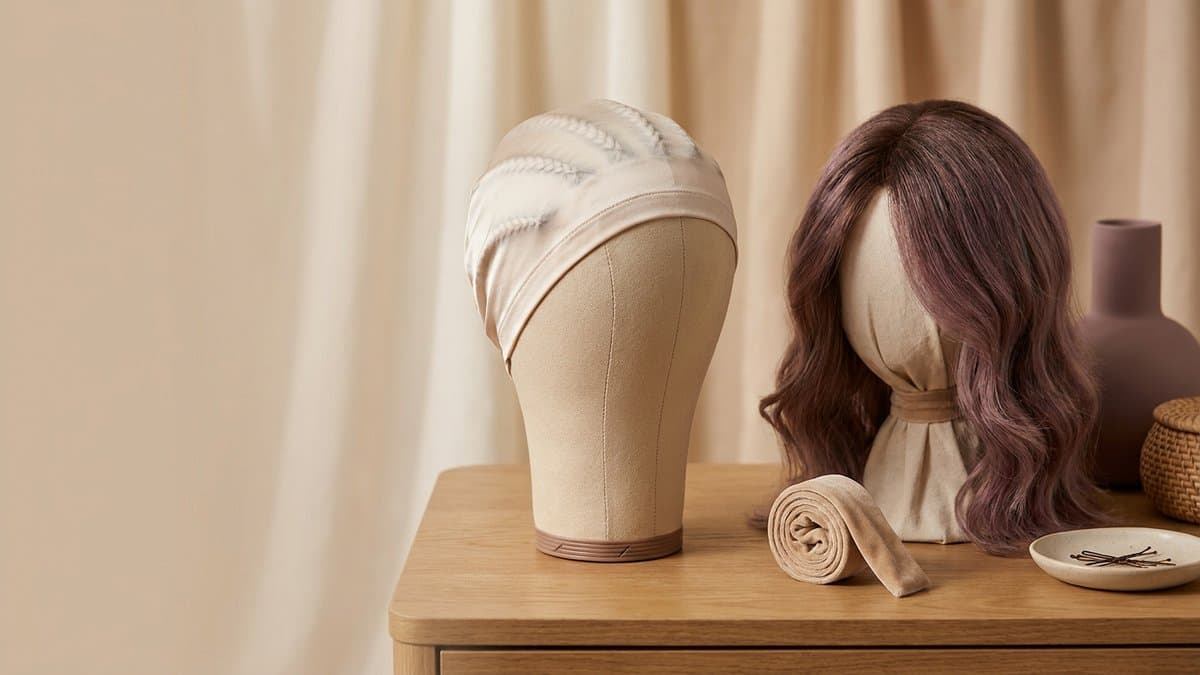
A wig sits very differently over a flat head of slicked hair than over braids, twists or locs, which add real volume at the scalp. The fix is not to force a standard cap tighter. It is to flatten the base, choose a cap with enough give, and secure the wig without adding tension at the hairline. Get those three right and a wig over a braided or loc base is comfortable all day.
Flatten the base first
The goal is an even, low-profile surface. Braid your hair in cornrows that run from the hairline toward the nape, keeping them flat and the same height, or use a flat-braid pattern that suits your head shape. Avoid piling hair into a bun or a single thick plait at the crown. That creates a bump the wig will perch on and slide off.
For twists or two-strand sets, pin them flat and low rather than gathering them up. With locs, lay them flat in a spiral or row pattern and pin, distributing the bulk around the head instead of stacking it.
Cover everything with a smooth, stretchy wig cap, ideally satin-lined, and pin or tuck any lift at the nape and temples. A flat base is most of the battle; a wig over a flat base tracks the skull and reads natural.
Size the cap for the volume
Measure over your braided base, not over slicked hair, using our cap sizing guide. Most people over braids or locs need the larger end of a size range, or a cap marketed as roomy or stretch.
Then rely on adjustment, not tightness. Use the built-in straps to take up slack at the nape so the cap hugs without squeezing. If a cap only fits by cranking the straps until your scalp pulls, it is the wrong cap, and sustained pull at the hairline is exactly what causes traction alopecia.
Secure without tension
Prefer security that does not load the hairline:
- Adjustable elastic straps at the nape do most of the holding.
- A silicone or velvet wig grip band adds friction around the perimeter without glue.
- Sewn-in combs can anchor into the braids, but place them at the sides and nape, not the front edges.
- Save adhesive for special occasions, not daily wear, and keep it off your baby hairs.
A glueless install is the default for braided bases because it combines straps, grip and combs with no bonding.
Which constructions sit best over braids
Lace fronts give the most natural hairline over a flat braided base and let you part freely. Headband wigs are the low-effort, zero-adhesive option and sit comfortably over volume because the band does the securing. U-part wigs work if you leave out a section of your own hair to blend, which some people with twists prefer.
Locs: bulk and retwists
Locs add more bulk than braids and regrow on their own schedule, so prioritize cap room and lighter wig weight over a skin-tight look. Plan your base around your retwist cycle: a fresh retwist lies flatter and makes a cleaner base, while mature growth adds height you will want to pin down. Recheck the base after washing, since locs can shift as they dry.
Keep the scalp healthy underneath
A covered scalp still needs care. Cleanse with diluted shampoo between the braids or locs, dry fully before re-covering, and moisturize the scalp so nothing flakes or itches under the cap. If your scalp is itchy or sore, take the wig off and address it rather than covering it; see our protective styling care guide for the full routine. When you are ready to buy, our best wigs for protective styling ranking lists gentle, glueless-first sellers.
Frequently asked questions
- Will a wig over braids look bulky?
- Only if the base is uneven or the cap is too small. A flat braid pattern plus a correctly sized cap keeps the silhouette natural.
- Can I wear a lace front over locs?
- Yes, with a flat pinned base and a roomy cap. Lighter density helps keep weight and bulk down.
- How do I stop my wig sliding off a braided base?
- Add a wig grip band and use the nape straps and side combs. Friction and adjustment beat glue for daily wear.
Sources
- Wikipedia: Protective hairstyle for base styles and their care.
- Wikipedia: Dreadlocks for loc structure and maintenance context.
- Wikipedia: Traction alopecia for the risk of sustained tension at the hairline.