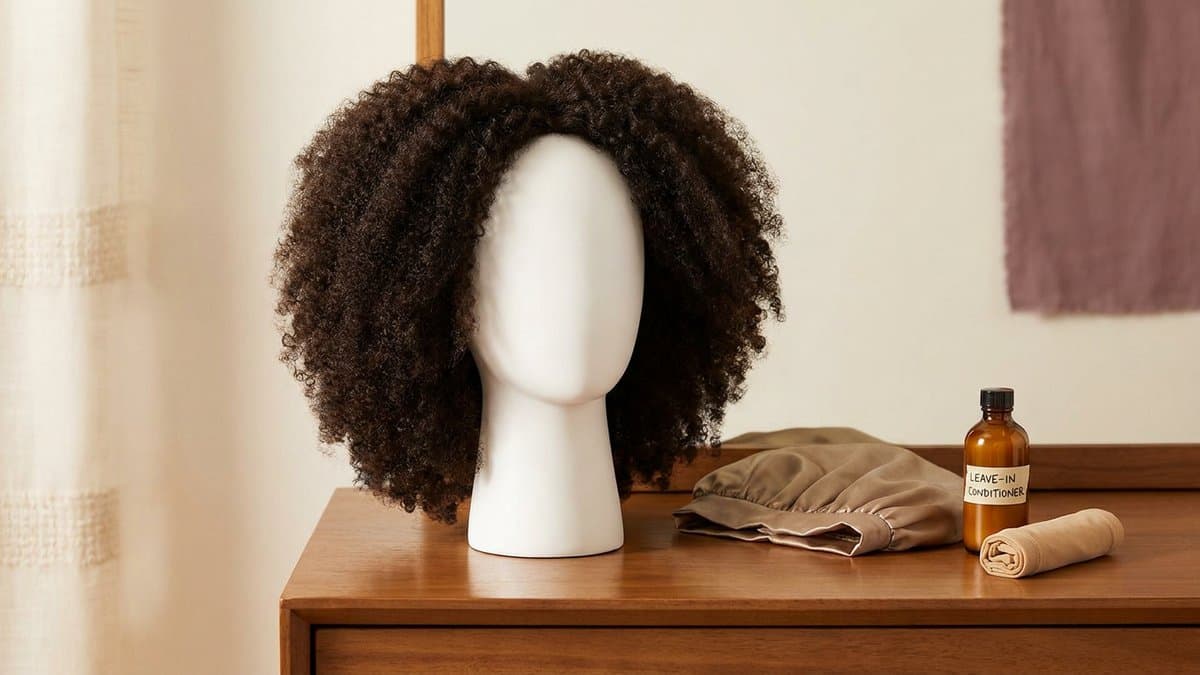
A wig is one of the most flexible protective styles going. It tucks your natural hair away, ends the daily heat and manipulation, and lets you change your look without committing your own hair to one texture for months. Done well, it genuinely protects. Done carelessly, the same wig can stress your edges and scalp. The difference is almost entirely in the base and the routine underneath.
What a wig actually protects
Protective styling means tucking hair away and reducing manipulation so strands stop breaking off short. Braids, twists, locs and wigs all do this. A wig adds a specific benefit: your hair skips daily brushing, heat tools and weather, and the ends, the oldest and most fragile part, stay sheltered. That is where length retention comes from.
The catch is that a wig only protects what is underneath if you still treat the hair underneath as living hair. A wig is not a reason to ignore your scalp for eight weeks.
Build a low-tension base
Start with clean, conditioned hair. Braid it down flat in cornrows or a flat-braid pattern that follows your head, keeping the braids loose at the hairline. The base should feel secure, never pulling. If your scalp aches or you feel relief taking the wig off, the base is too tight.
Cover the base with a smooth, breathable wig cap. A satin-lined cap reduces friction against your hair while the wig sits on top. For the mechanics of fitting over a braided base, see our guide to wearing a wig over braids and locs.
Skip glue at the hairline
Adhesive along the hairline is the fastest way to damage edges, the fine baby hairs that are slowest to recover. If you want a laid hairline, a glueless install with an adjustable band or a wig grip holds the front without bonding anything to your skin or hair. Headband wigs remove adhesive from the equation entirely and are a genuinely gentle option for long-term protective wear.
Sustained tension or pulling at the hairline can lead to traction alopecia, a form of hair loss caused by constant pull. It is preventable, and the prevention is simply less tension and fewer glued edges.
Keep caring for the hair underneath
A protective style is not a storage locker. On a routine:
- Cleanse the scalp regularly with diluted shampoo, even under the cap.
- Moisturize the hair and scalp with a light leave-in or oil so nothing dries out.
- Let the scalp air and dry fully before re-covering; trapped dampness invites buildup.
- Wrap or protect at night with satin to cut friction.
This mirrors how you would care for braids, and it is the part most people skip. See caring for human hair wigs for the wig side of the routine.
Take real breaks
Between long installs, give your hair a few days to a week out, worn loose or in a soft style, so you can cleanse properly, check the hairline and re-moisturize without a cap in the way. Breaks also let you catch early thinning at the edges before it becomes a pattern.
Choosing a protective-friendly wig
Lighter weight and lower tension matter more than looks for long-term wear. A well-fitted cap you can secure with straps and combs, not glue, is the goal; measure first with our cap sizing guide. Lower density also means less weight pulling on the base; our density guide covers the trade-offs. For which sellers to buy from, see our best wigs for protective styling ranking.
Frequently asked questions
- Can a wig damage my natural hair?
- Only through tension, glue or neglect. A loose base, no adhesive at the edges and a real care routine underneath keep it protective.
- How long can I keep a wig install in?
- Most people do two to six weeks with regular scalp care, then take a break. Shorter is kinder to the hairline.
- Do I need a wig cap over my braids?
- Yes. A smooth breathable cap, ideally satin-lined, protects the braids and gives the wig grip without tension.
Sources
- Wikipedia: Protective hairstyle for what protective styling does and its limits, including traction risk.
- Wikipedia: Traction alopecia for hair loss caused by sustained tension.
- r/wigs wearer experience on bases, caps and long-term wear.