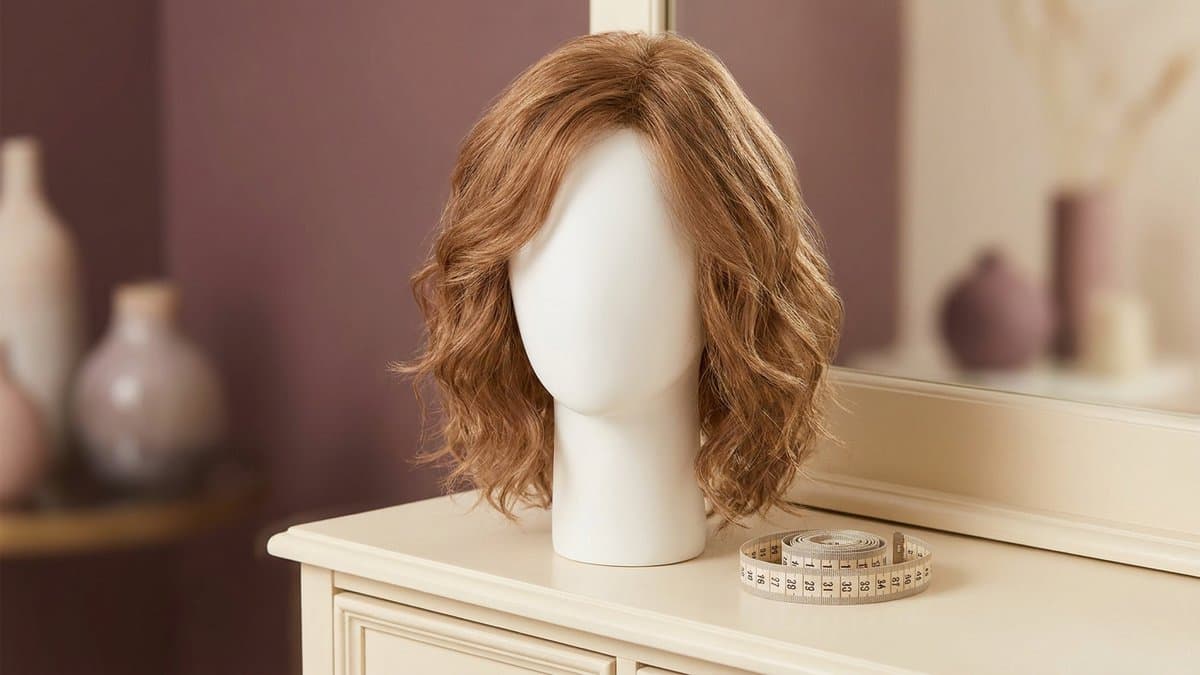
A wig for thinning hair has a different brief than a wig for a fully bald head. You are adding coverage over a scalp that still has fragile hair around it, so the priorities are a believable part, low weight, and security that does not pull. Buy for those and the result reads as better hair; buy for the loudest fashion feature and it reads as a wig sitting on top of thinning. This checklist keeps the choices in order.
Step 1: Decide wig versus topper
If your sides and back are healthy and only the top is thinning, a topper may serve you better and lighter. If loss is widespread or you want a full change, a wig is the base. Work through wig versus topper first. If a topper fits, see hair toppers explained.
Step 2: Choose the coverage construction
The part and crown are what give away thinning hair, so the top of the cap matters most. A monofilament or hand-tied top looks like scalp and lets you part anywhere. A lace front helps if the hairline is also affected; see lace front wigs. A basic machine-made cap is cheaper but the pre-set part can look drawn-on over a thin crown.
Step 3: Keep weight and density sensible
Heavy, dense caps drag on fine hair and look like a helmet. Aim for moderate density, around 130 to 150 percent, which reads natural and stays light. Our density guide covers the trade-offs by length and texture. Lighter caps also mean less heat and less pull over a long day.
Step 4: Match color at the roots
Under a part, it is the root color and the scalp tone that show, not the lengths. Match the roots and add a little grey or dimensional blend if your own hair has it. A flat, single-color part looks fake on thinning hair faster than any other flaw.
Step 5: Secure it gently
Fragile hairline and crown cannot take tight combs or glue at the edges. Use nape straps, a soft grip band and side combs, not front-edge tension. The mechanics are in how glueless wigs stay on, and protecting the hairline is covered in how to protect your edges.
Step 6: Buy from a seller that supports returns
Fit and color on thinning hair often need one exchange. Buy from sellers with clear return policies and responsive support, and check the evidence first; our best wigs for thinning hair ranking weights construction and service for exactly this use case.
Frequently asked questions
- Do I need a full lace wig for thinning hair?
- Rarely. A monofilament or hand-tied top covers the part, which is the real concern, at lower weight and cost than full lace.
- Can I wear my own hair out with a wig?
- Yes, and it helps the blend. A U-part or a wig with a lace front lets you leave out your own hair around the parting for a natural transition.
- Will a light wig still give coverage?
- Yes if the top construction is right. Coverage comes from a scalp-like part and moderate density, not from a heavy cap.
Sources
- Wikipedia: Alopecia for hair-loss patterns and coverage.
- Wikipedia: Wig for cap construction context.
- r/wigs wearer experience on choosing wigs for thinning hair.